ISSA Conference
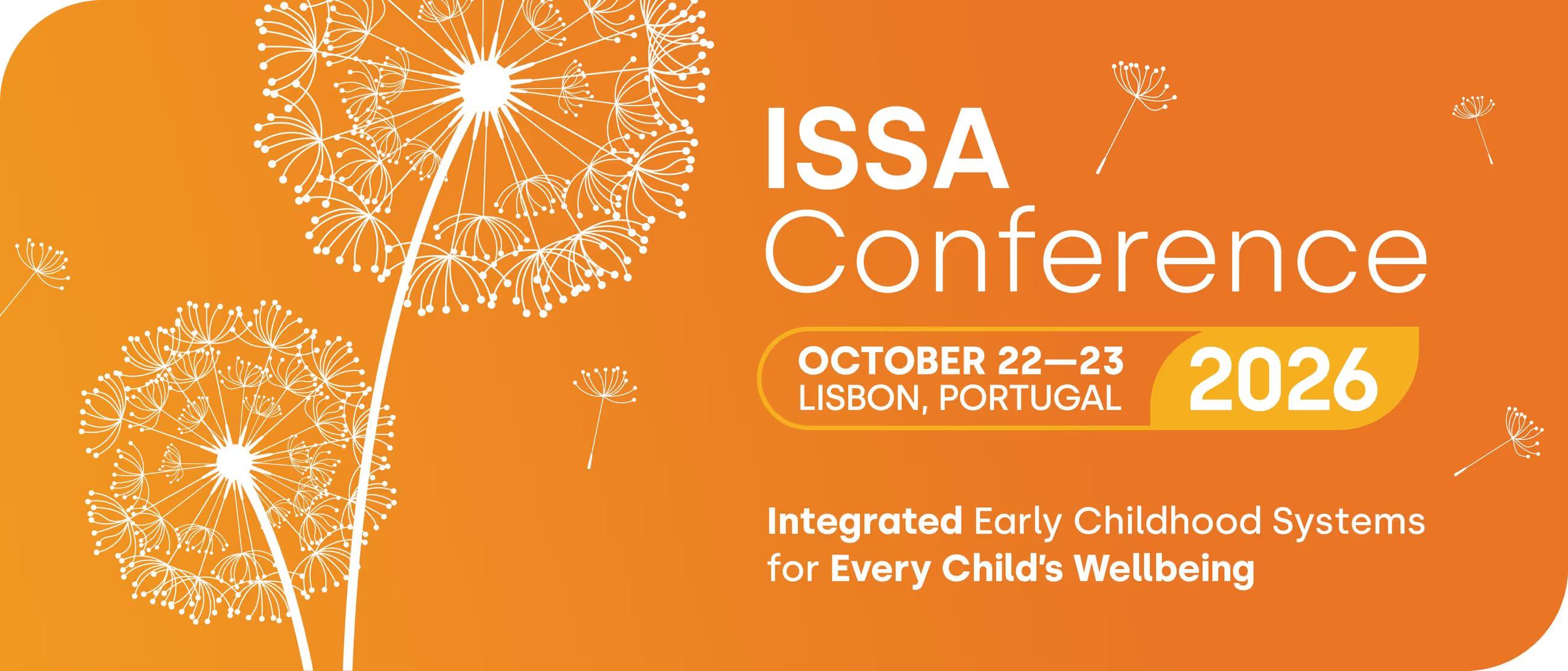
Welcome to ISSA Conference 2026!
We are excited to welcome you back for ISSA Conference 2026, a landmark gathering for the early childhood field. This year, we unite around a shared and urgent focus: advancing integrated early childhood systems that place every child’s wellbeing at the centre by strengthening coordinated action across sectors, disciplines, and services.
ISSA Conference 2026 is co-hosted by ISSA and the Learning for Well-Being Institute, in partnership with the Aga Khan Foundation, APEI, the OECD WISE Centre, and Act for Early Years. The conference will take place in Lisbon on October 22–23, with pre-conference events on October 21.
Stay in the know: Subscribe to our newsletter on LinkedIn for updates, and follow our page.
What Makes ISSA Conference 2026 Unique?
Building on more than 25 years of convening diverse voices across the ECD ecosystem, this edition introduces a solutions-driven format where policymakers, practitioners, and researchers collaboratively shape concrete outcomes to ensure that every young child thrives. Together, we will:
- Move beyond dialogue to co-develop actionable solutions that extend long after the conference.
- Bridge policy, practice, and research to shape integrated early childhood systems.
- Explore aligned financing and policy approaches that reinforce integration rather than fragmentation.
- Strengthen intersectoral coordination across health, education, social protection, and family support.
- Work through dynamic formats including integration labs, policy-practice hackathons, and community dialogues.
Mark Your Calendars!
Join us in shaping stronger, more coordinated, and more equitable early childhood systems worldwide.
Follow us on LinkedIn | Subscribe to the Conference Newsletter
to stay tuned for conference details
#ISSACONFERENCE2026 | #EveryChildsWellbeing
Conference Co-Hosts

Conference Partners
Partner with Us
ISSA Conference 2026 offers partners a unique platform to demonstrate their commitment to advancing integrated early childhood systems while connecting with an international network of experts, leaders, practitioners, and decision-makers. By joining us, partners gain visibility, influence, and exclusive opportunities to strengthen their networks and shape global and local action for every child’s wellbeing.
Partnerships can take many forms, including funding support, hosting the conference or sessions at your venue, sponsoring key sessions or side events, subsidizing participation for delegates from low- and middle-income countries, sending delegations, or providing services and expertise to enrich the conference experience. Whatever the form, each partnership amplifies the reach and impact of the conference, making it accessible, inclusive, and transformative for diverse actors across the early childhood field. To learn more about plans for ISSA Conference 2026 and how you can get involved, contact lghent@issa.nl.
A Snippet for You from
ISSA Conference 2024
Looking Back - ISSA Conference 2024
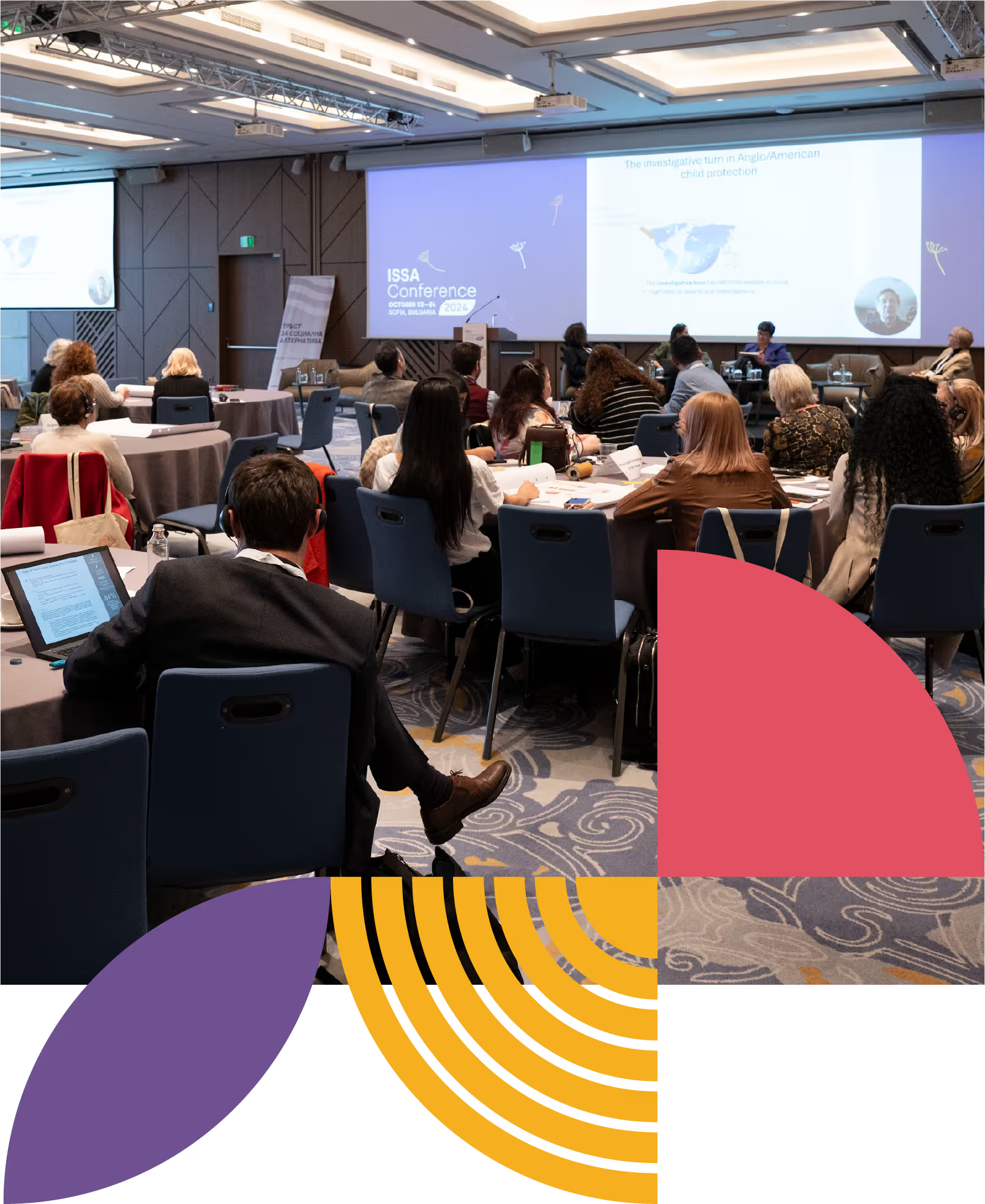
In October 2024, Sofia, Bulgaria became a hub of innovation and inspiration with the ISSA Conference, as 450 early childhood professionals from 50+ countries came together to share, learn, and inspire action on the theme: “It Takes an Early Childhood Ecosystem for All Young Children to Thrive.”
Explore highlights from Sofia:
View 2024 conference details|Read the recap article
Learn more about past ISSA Conferences: 2016 | 2017 | 2019
Stay in the know!
Subscribe to our newsletter on LinkedIn for updates, and follow our page. And...we are continuing the conversation we started at ISSA Conference 2024 on our LinkedIn group.
About ISSA Conference 2026
The ISSA Conference is one of the world’s leading convenings for early childhood professionals, bringing together researchers, practitioners, policymakers, civil society organizations, funders, and others who shape the systems around young children and their families. More than a conference, it is a global hub for collective intelligence, where cutting-edge research meets practice, and where bold ideas evolve into solutions that strengthen early childhood systems.
Through rich discussions, immersive workshops, and highly interactive formats, participants engage with evidence, share proven approaches, and learn directly from peers facing similar challenges across diverse contexts. Each edition offers a vibrant program of one-day pre-conference workshops and site visits, enabling participants to experience innovative services and practices firsthand.
By uniting multiple perspectives, the ISSA Conference accelerates learning, fosters cross-sector collaboration, and equips participants with actionable insights they can immediately apply to their work and communities and ensure a brighter future for every young child.

About ISSA Conference 2026 Partners
Conference Co-Hosts
ISSA
The International Step by Step Association (ISSA) is a leading network driving systemic change in early childhood across more than 40 countries. For over 25 years, ISSA has championed integration, equity, and quality in early childhood systems by fostering collaboration across sectors, strengthening the early childhood workforce, and amplifying innovative practices. Through its diverse membership, ISSA connects policymakers, practitioners, and communities to create coherent systems that support every child’s holistic development and wellbeing.
The Learning for Well-being Institute produces high-quality research to advance holistic child development and well-being. Grounded in the Learning for Well-being (L4WB) Framework—which recognises development as a system shaped by mental, emotional, physical, and spiritual dimensions—it equips policymakers, practitioners, and communities with evidence to guide effective and ethical action. Through rigorous methods, strategic partnerships, and advocacy, the Institute strengthens policies and practices that help children realise their unique potential.
Conference Partners
Aga Khan Foundation
Aga Khan Foundation Portugal (AKF Portugal), an agency of the Aga Khan Development Network (AKDN), has worked in the country since 1983 to promote social cohesion and strengthen inclusive communities. As one of the few institutions in Portugal addressing development across the life course, it works through long-term, participatory approaches in areas such as early childhood development, education, civil society, seniors, climate resilience, and work and enterprise. Recognized nationally in Early Childhood Development (ECD), AKF Portugal strengthens the professional development of early years educators and promotes high-quality pedagogical practices, while fostering collaboration among public institutions, civil society and local communities, contributing to its overarching mission of building a future where we all thrive together.
APEI: The Association of Early Childhood Education Professionals
APEI, the Association of Early Childhood Education Professionals, is a leading national organization in Portugal dedicated to promoting high-quality early childhood education for children aged 0 to 10. Representing more than 5,000 members, including educators, students, and institutions, APEI brings together about one third of the country’s ECE sector. Focused on professional development, innovation, and knowledge sharing, APEI offers training, organizes seminars, publishes professional journals, and provides consultancy to local authorities. It serves as an essential reference and forum for dialogue, supporting educators as they navigate pedagogical, ethical, and policy challenges.
OECD Wise Centre
OECD WISE Centre generates new data and policy approaches to improve people's well-being and reduce inequalities, mapping how human well-being is impacted by ecological, digital and demographic transitions. A key priority for WISE is ensuring every child has an equal start in life. Through the OECD Child Well-Being Data Portal, we monitor children’s well-being and explore how societies can better support children facing disadvantage. WISE also works closely with OECD countries to create tools and strategies that strengthen policy and service integration,promote place-based approaches, and address emerging challenges, including those brought by the rapidly evolving digital environment.
Act for Early Years
Act For Early Years is a global campaign ensuring all girls and boys access quality early childhood development, care and preschool education—vital for school readiness and lifelong well-being. We believe early investment is one of the most powerful ways to break cycles of poverty and inequality. The campaign has three goals: (1) mobilize at least $1 billion in new funding through the first International Financing Summit on Early Years, taking place in early 2027; (2) increase political prioritization of the early years across national, regional and global agendas such as the G20; and (3) secure a strong place for early years in the global development agenda and new SDGs. Led by organizations worldwide, the campaign unites frontline workers, experts, youth advocates, business leaders, civil society groups and individuals committed to ending the global early years crisis.
The Conference serves as an official Pre-Summit Regional Early Years Finance Dialogue in the lead-up to the first-ever Early Years Finance Summit in 2027. It provides an opportunity to engage and orient partners, policymakers and political leaders around the objectives of the 2027 Summit, while highlighting global and regional best practices in costed early years plans, investment cases, inclusive financing models and effective delivery strategies.
Partner with Us
ISSA Conference 2026 offers partners a unique platform to demonstrate their commitment to advancing integrated early childhood systems while connecting with an international network of experts, leaders, practitioners, and decision-makers. By joining us, partners gain visibility, influence, and exclusive opportunities to strengthen their networks and shape global and local action for every child’s wellbeing.
Partnerships can take many forms, including funding support, hosting the conference or sessions at your venue, sponsoring key sessions or side events, subsidizing participation for delegates from low- and middle-income countries, sending delegations, or providing services and expertise to enrich the conference experience. Whatever the form, each partnership amplifies the reach and impact of the conference, making it accessible, inclusive, and transformative for diverse actors across the early childhood field. To learn more about plans for ISSA Conference 2026 and how you can get involved, contact lghent@issa.nl.
ISSA Conference 2026 Theme
Advancing Integrated Early Childhood System for Every Child's Wellbeing
Despite strong evidence about the importance of early investment, early childhood services often remain underfunded and disconnected. Health, education, social protection, and family support frequently operate separately, which means many children and families do not receive coordinated or consistent support. In some high-income countries, strict eligibility criteria have also created unequal access to services, reinforcing disparities instead of reducing them.
Creating stronger early childhood systems requires better coordination and integration—aligning funding, governance, professional skills, and service delivery around children’s development and family wellbeing. This calls for a whole-ecosystem approach where actors across all sectors and levels work toward shared goals.
ISSA Conference 2026 takes this challenge head-on. We will explore where integration is working, where it falls short, and why—while inviting participants to co-create practical, actionable solutions rooted in real-world experience. These discussions will unfold through three thematic strands, each addressing a key dimension of building integrated early childhood systems.
Core Thematic Strands
1. Breaking the silos: integration across sectors and levels
This strand explores the practical realities of creating coherence across health, education, social protection, and family support systems. Sessions will dig into:
- How different governance levels (national, regional, municipal, community) can coordinate policies and services without duplication or gaps.
- What governance models (e.g. inter-ministerial committees, integrated agencies, municipal hubs) enable sustained collaboration.
- The role of “middle-tier” services—home visiting, childcare, family support, health interventions—as connectors between high-level policy and families’ everyday lives.
- Challenges such as overlapping mandates, siloed budgets, and political turnover—and how countries have managed to overcome them.
Guiding question: What does effective integration look like in practice, and how can it be sustained across levels of governance?
2. Resourcing what works: financing, policy, and practice alignment
This strand focuses on the money, mechanisms, and mandates that either support or undermine integrated systems (national, regional, local, program/service level). It will address:
- How countries budget for early childhood across ministries and how spending patterns affect equity?
- Examples of financing strategies that prioritize prevention and holistic support rather than fragmented interventions.
- How to ensure that policies are not only well-designed but adequately resourced for implementation at scale.
- The role of data, monitoring, and evaluation in showing whether resources are making the intended impact.
- Ways to leverage international and EU-level funding streams for systemic integration.
Guiding question:How can funding, policy, and practice be aligned to support integration rather than reinforce fragmentation?
3. Co-constructing solutions: voices across the ecosystem
This strand places the emphasis on inclusion, collaboration, and shared ownership. It will explore:
- How families, communities, practitioners/service providers contribute to shaping policies that affect them?
- Examples of participatory governance–citizens’ assemblies, parent councils, practitioner-researcher partnerships–that give voice to those often left out.
- Public-private partnerships: NGOs and civil society as active contributors to systemic integrated solutions. Strategies for scaling up successful local innovations to inform regional or national policy.
- Cross-country dialogues on what actors at different levels can do differently to advance integration.
Guiding question: How do we ensure all voices–from policymakers, to practitioners, to parents–co-create solutions for integrated early childhood systems.
Together, these strands will unfold through dynamic, highly participatory formats designed to help participants move from insight to concrete, system-level solutions.